
Working as a funeral professional means helping support people at some of the most vulnerable and defining moments in their lives. It’s meaningful work, but it can also be emotionally demanding. Being alongside families in their grief every day, can quietly shape the way we see the world and influence how we take care of ourselves. For many of us, that balancing act becomes even more complex when our professional role intersects with our own personal loss.
The Connection Between Grief and Wellbeing
Across the UK, bereavement impacts millions each year. With around 600,000 deaths annually, an estimated 6 million people are newly bereaved every year. Many find themselves dealing not only with sadness but the physical and emotional strain that accompanies grief: research consistently shows that bereavement affects both mental and physical health, with many adults reporting low mood, anxiety, fatigue, sleep difficulties and other physical symptoms after a loss. For some, grief becomes prolonged, affecting around 9% of adults. And yet, despite the scale of this need, around 40% of people struggle to find the right support when they need it most.
In emotionally intense professions like ours, a lack of support and constant exposure to loss can increase the risk of burnout. But research offers hope. Regular exercise and healthy sleep have been linked to a 30% lower risk of depression and anxiety, while personal wellbeing practices can reduce workplace burnout by up to 40%, helping us stay emotionally resilient. Mind UK also highlights the role physical activity can play in building this resilience – something especially important for those working in emotionally demanding environments.
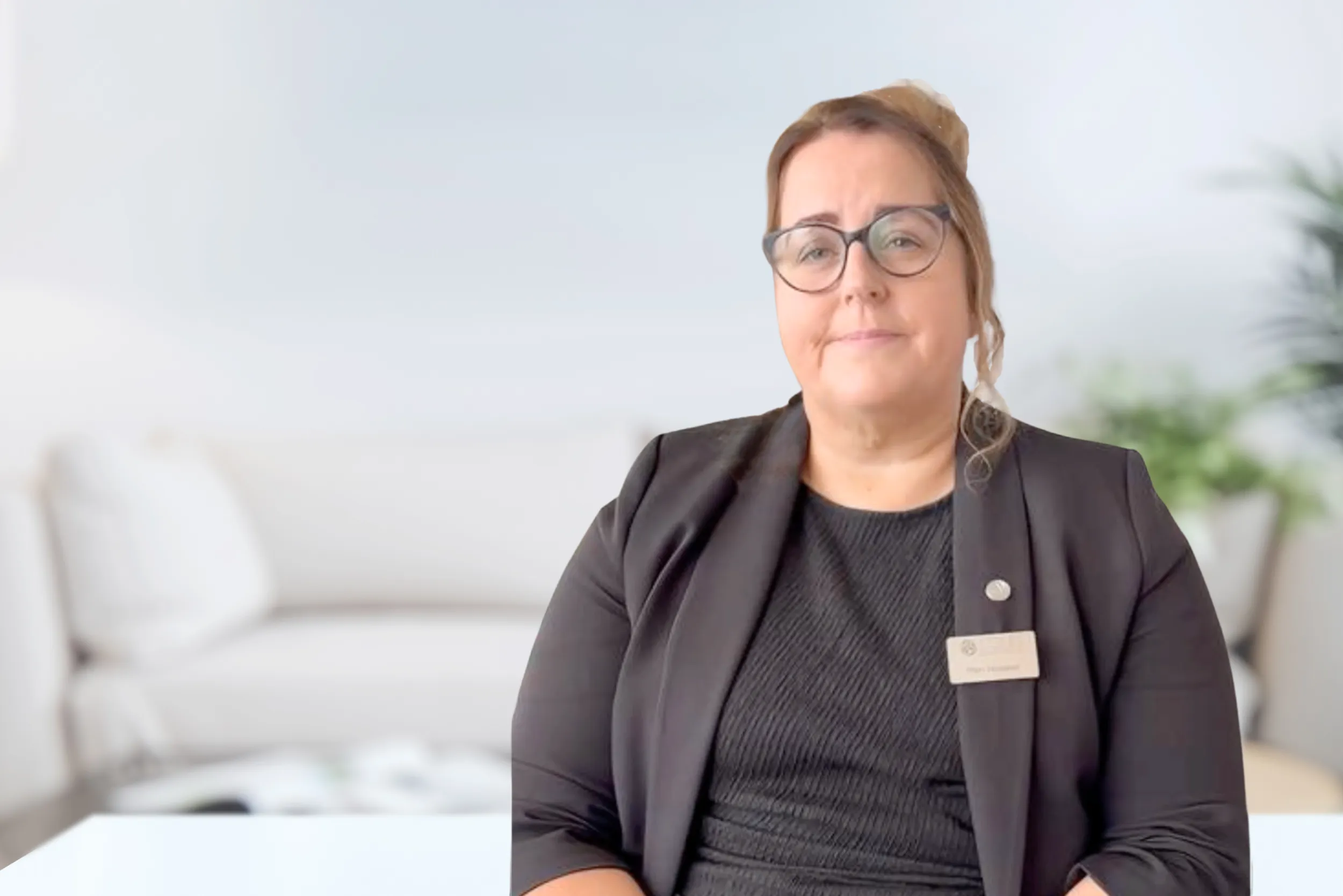
It’s why we are so grateful to Mari Hooper, part of our Family Support Team, for sharing her experience. We caught up with her to understand how her own grief shaped her life from a young age and how reconnecting with the outdoors and supportive friendships has helped Mari rebuild her strength – physically, mentally and emotionally.
Mari’s Grief and Fitness Journey
Hello Mari, thanks for agreeing to chat to us today – perhaps first of all you can tell us a little bit about yourself?
I work at Coles Funeral Directors as part of the Family Support Team, and I absolutely love what I do. Supporting families is a real privilege. Outside of work, my world revolves around my little boy, Jacob, who’s seven and full of life.
Over the past year I’ve also been on a big journey with my health and fitness, which has changed so much about how I feel physically and emotionally. That’s why I was happy to share my story today.
You’ve talked in the past about losing your Dad at seventeen, how did that experience impact you and your wellbeing?
Losing my dad at seventeen completely shook my world. It was sudden, it was unexpected, and it felt like the ground disappeared beneath us. He was so young, and none of us had time to prepare.
Looking back, it changed everything about how I understood life. My mum and I had to rebuild ourselves from something that felt like complete devastation. At that age, you’re still figuring out who you are, and grief forced me to grow up incredibly quickly.
We know grief can impact us in many different ways. Looking back, how did your own grief impact your health and habits?
Emotionally, I didn’t know how to cope, and food became the thing that comforted me. It felt like something stable when everything else was chaotic. At the time, I didn’t realise how much those habits were building up, but over the years my wellbeing really took a back seat.
I wasn’t thinking about exercise or self-care, I was just trying to get through each day the best way I could.
Working closely with grieving families everyday – how has that shaped your own perspective on life and taking care of yourself?
This role makes you very aware of how precious life is. When you support families through their darkest moments, you can’t help but reflect on your own mortality, your life and how you’re living it.
I feel taking care of myself is so, so important- not just for me, but so I can show up fully for the families who rely on us. You can’t pour from an empty cup, and this job really teaches you that.
What made you realise it was time to focus on your own health and wellbeing – was there a turning point?
At our Christmas event last year, I remember smiling for photos, appearing to be happy, but inside I was so uncomfortable. I was wearing black again, trying to hide myself. That moment stuck with me, so on the very first day of January, I decided things had to change. Not a diet – not a quick fix – but a big change in how I treat and look after myself.
How did you start to make those changes and what was it that kept you going?
I joined a Slimming World group, and honestly, they were fantastic. The support, the encouragement, the accountability – it made such a difference. And also, because it isn’t always easy, what kept me going was having people around me who believed in me. A close friend started exercising with me, and we’ve become each other’s motivation. My family and friends have been cheering me on the whole way. There were tough days, of course, but knowing I wasn’t doing it alone made all the difference.
What does self-care look like, compared to before?
Self-care used to be the thing I always pushed to the bottom of the list. Now, it’s part of my everyday life. I’m running regularly – something I never imagined I’d be able to do, and I go to a dance class which has brought so much joy back into my routine. But it’s also about giving myself permission to slow down, to eat nourishing food, to reset. I make time for myself in a way I never did before.
You’ve mentioned getting active with friends – how has that helped?
So, we either go to the gym or we do a lot outdoors, like walking, which is so good for my mental health. But we also take time to have a coffee afterwards and catch-up, especially in this role, it’s something you need to do to take yourself away from everyday life and your job.
How do you find balance between your busy role and looking after yourself?
I work three days a week, in a busy role, but I take time on my days off and weekends to do the things that are important to me – time with my family and friends and my exercising. I spread it out. And I stick to it.
What would you say to someone who’s grieving and finding it hard to look after themselves?
Grief is a big journey. Take one day at a time. But try and get out – go for that coffee, have a walk because it really will help you, and your mental health and how you cope with everyday life.
You don’t have to do everything at once, just one small step can make a difference.
Mari, have you done so well in this health and fitness journey – what has been your proudest moment?
There are two things. My aim was to lose four stones by Christmas, which I have gone over now. And also improve my fitness level – that’s probably my main thing because now I can run for thirty-minutes outdoors.
Together, those two goals have made a huge difference to every day life, especially being able to keep up with my son and be more active with him.
Thank you Mari for the timely reminder that grief doesn’t just change how we feel – it can change how we live. We’re incredibly proud to celebrate your continued determination and the positive changes you’re making for yourself. Keep going.
Mari’s story reflects something many people experience but rarely speak about – how loss can impact our wellbeing. Yet it also shows that reintroducing routine and healthy behaviours – a walk with a friend, fresh air and rest – can build the foundations for healing. Mari’s journey demonstrates that even small steps toward self-care can create meaningful change.
Supporting Yourself While Supporting Others
For those working with bereaved families we encourage you to prioritise your own wellbeing and if you need it, seek support. Here at Coles Funeral Directors all our team have access to free and confidential support with SAIF. Because caring for ourselves allows us to give the best possible care to the communities we serve.
If you are grieving yourself, or finding it hard to care for your own wellbeing, you don’t have to go through this alone. There is support available, through charities, community services and bereavement programmes across the UK.
These are just some of the bereavement partners we work with:
Helping people with bereavement support, information and campaigning – https://www.cruse.org.uk/
For families who have lost a child or a young adult – https://2wish.org.uk/
For further information on bereavement support get in touch at [email protected] or call us on 02920 797 516